
The Church of 10,000 Yeses
“I use ‘centering’ as a verb, to mean a continual process of uniting the opposites. Centering, for me, is the discipline of bringing in rather than leaving out; of saying Yes to what is most holy as well as to what is most unbearable.The severity of that, as a discipline, is not widely understood.”
M.C. Richards

Surrendering to the Mystical Yes
Note: This website is fully under construction. It is not expected to be coherent and understandable until early 2026. For any questions, contact: kenthoffman1400@gmail.com
“I use ‘centering’ as a verb, to mean a continual process of uniting the opposites. Centering, for me, is the discipline of bringing in rather than leaving out; of saying Yes to what is most holy as well as to what is most unbearable.The severity of that, as a discipline, is not widely understood.”
M.C. Richards
The Everlasting
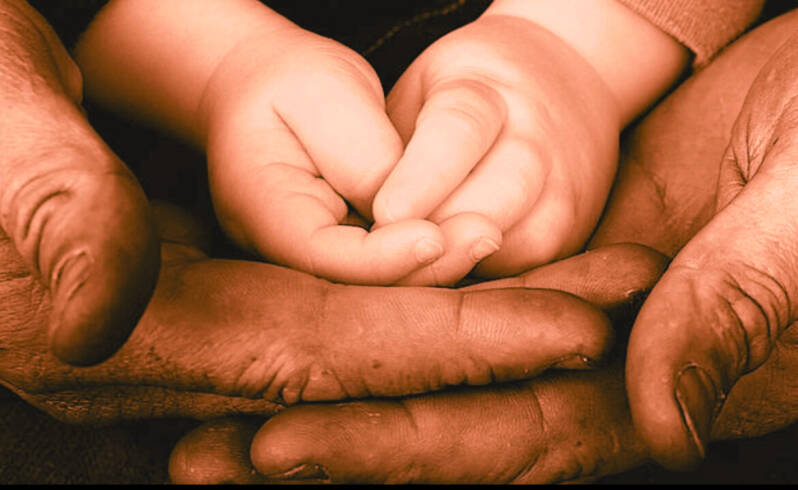
“What is common to all indigenous peoples is a belief that we are all relatives, all of one being. All is sacred. I have been given glimpses of what some call “the everlasting.“ I have seen this place in a newborn’s eyes, and in sunrise, and dusk, the darkest night, the face of a flower. The everlasting is who we truly are, where we truly belong.” - Joy Harjo
Many of us know the story of the Zen master, when asked by a beginning student to be shown what an enlightened mind experiences, pointed his index finger toward the moon. In an instant, the young student has what is considered an introductory moment of kensho (enlightenment). He suddenly knew something he had not known before.
Days later, the master sees the student talking with another beginning member of the monastery. After a few minutes he recognizes the student pointing to the moon. He immediately calls his student to him and enquires what about what had just taken place. The student rather confidently smiles and exclaims, “Oh, I was just showing him enlightenment.” At which point the master pulls out a knife and cuts off his index finger.
In that moment, the young student experienced a much deeper awareness and awakening.
Through the years, I’ve realized that something was wrong with my understanding of this story. Wasn’t the recognition of the moon as an end point still a problem? Wasn’t some-thing continuing to stand in for a no-thingness (the empty/fullness that can’t be conceptualized) we are waiting to come home to?
Finger? Of course not.
Moon? What? (It makes no sense that the learning ends with our seeing the moon.)
Recently, a good friend and Trappist nun who I’ve known since 1973 died at the age of 93. Veronique Geeroms spent the vast majority of her life as a monk at Redwoods Monastery in Northern California. She was a woman whose presence encompassed vast awareness while using few words.
To know Veronique was to be known by her. Veronique’s piercing eyes and mischievous smile consistently Introduced me to always new sense of myself and an expanded realization concerning life.
When I first began visiting the monastery, I foolishly blurted out a “beginner’s question” to Veronique. “After your decades of prayer and meditation, what have you learned?” Without hesitation, she generously responded (with no need to comment on the foolishness of my question). Her “answer” would understandably take me decades to decipher. “Oh Kent, I am happy to share.” She paused briefly and then uttered a single word:
“Ask.”
I didn’t know it then, but this was Veronique pointing at the moon. It was her introduction of a koan (a question requiring resolution that is unsolvavable with the mind) that has become my path. Every koan, when real for us, is deeply personal in how it points in the direction of intimacy-with-oneness.
Since that moment of Veronique’s response many years ago, I’ve been winding my way toward an answer, living ever more fully inside the Zen moon that began this essay.
At times I’ve prided myself with the fantasy that I understood what an answer might be. But each conclusion would prove itself to be nothing more than mental understanding, quite the opposite of the intimacy Veronique’s single word was encouraging me to discover.
I was learning that the finger is never helpful.
Neither was the globe in the sky (as I was currently seeing it).
Then, in 2019 I retired from a life of deeply fulfilling work. What came next was completely unexpected. The moon fell from the sky and I was plunged into an almost absolute darkness. Labeled “major depression,” any attempt to “ask” (or any hope of making sense of what was going on) disappeared.
Koan be damned. Moon be damned.
My dark night lasted four, impenetrable years.
Veronique’s instruction now felt like travesty. When she reached out to me, I could only feel barren, unable to allow her obvious concern. As is true with any dark night of the soul (which, I might add, need not be this dramatic to be effective) I was unable recognize that I was being led deeper down and deeper in, to an underground (unconscious) darkness where I had always lived; quite likely the place Dante described, where all hope is lost.
Without going into details, this point of hopelessness would eventually prove to be a zip code of experience from my earliest years, where “Don’t ask because no one will answer” best summarizes the negative certainty I had concluded to be “all of reality.”
I want to pause briefly to focus on those two words: “negative certainty.” Many of us carry a nameless pain that defines our lives. It’s a sense of being lost and longing, an unspoken belief that we may never find our way home. We live with it because it’s so familiar and we have no clue how to get rid of it. Even so, we’re always trying to override it, climb over it, find a way to be done with it.
What we likely don’t know is that the negative certainty that fuels our struggle is the hidden map to finding our way home.
Our negative certainty is a pattern of mistrust learned at a time we weren’t aware we were making decisions that would define the remainder of our lives. This mistrust is painfully common and hums in the background in a way we may never notice. It’s a belief about ourselves (especially about how lovable we are). It leads to emotional defenses that we assume to be wise. It is a chronic fearfulness (that shows up as defensive posturing or anger or attempting to stay in control). It keeps some of us vague and distant and others desperate and intense. It takes many forms, but it’s a fundamental dis-ease, an underlying negativity that binds our hearts while always running the show.
As a clinician for over 40 years I would say that the single most important issue creating the greatest mayhem in so many of us is negative certainty. It is learned in the moments when our core need for what philosopher Gabriel Marcel calls “a primitive inner assurance” (experienced in relationship with a deeply responsive caregiver) simply doesn’t happen. In developmental research we are now able to study (using video analysis of micro-moments of interaction) the precursors of this negative belief system as they are established in the early months and years of a child’s life. These are experiences that wouldn’t meet the standards of either abuse or neglect as commonly understood. Even so, they are moments of a caregiver profoundly missing the mark of a child’s sensitivity and need.
These are moments, in the words of clinical psychologist James Finley, “too painful to be true, but they are true.” They happen repeatedly, commonly in patterns, inevitably leaving their mark because something needed (gestures of comfort, attunement, caring) don’t happen. Or something that should not happen (gestures of harshness, indifference, etc.), keep happening. A dark certainty permeates our lives from that point forward.
At the heart of all negative certainty is the belief that “no one will meet me in this place of need.” (Ex., needs for concern, support, kindness, honoring of autonomy, etc.) I know of no one (client, colleague, friend, family member) who doesn’t practice negative certainty in some significant way. This is, of course, always on a continuum: some of us are relatively secure with modest negative certainty; some, like me, walk through life with insecurity and fear that often overwhelm on a regular basis.
Welcome to the club.
I once say a bumper sticker that summarizes negative certainty: “There is no use being pessimistic. It wouldn’t work anyway.” All negative certainty carries two beliefs: 1. Whenever possible, avoid trust. 2. My life is up to me. Alone.
Try any of these negative certainties on for size and then think of five people for whom they continue to remain accurate:
I won’t be loved.
I can’t be met in my real needs.
I’ll end up alone.
Life inevitably disappoints.
I don’t really matter.
My life won’t ever work out/be fulfilling.
My fundamental certainty (“Life isn’t safe and the love I most need won’t happen . . . and if it does, it won’t last.”) has always called the shots. Most of the mischief it caused was outside my recognition. My adult life was lived doing well enough on the surface. But underground, there was a persistent (if unconscious) despair. It would emerge regularly as anxiety about health and a pressure to perform and a need to “make my mark” in the world. It also would show up as depression, with an underlying certainty that I was ultimately alone in the pain life had to offer.
Why do so many of us go through life finding ways to prove the truth of our negative certainty? Because the alternative would require trust (deep trust), a risk we consider profoundly unwise.
You can’t fall out of bed if you sleep on the floor. At the level of our negative certainty, vulnerability doesn’t seem worth the risk.
To have our deepest hope (for love, tenderness, support for authenticity) betrayed (yet again) is simply beyond our willingness to consider. The sad reality is that most of us gave up hoping before we knew we were forming conclusions about life.
Our negative certainty is just the way life is.
And yet, in 2019, a hidden wisdom inside my depression was forcing me to enter the exact need I had unconsciously chosen never to return to. My age old certainty that I was unlovable and alone in life made sure I never truly risked Veronique’s suggestion that I ask (deep inside my negative certainty). Ask superficially (by asking for what you want) but don’t ask with the vulnerability required to openly need the love you’re sure didn’t actually exist.
Fingers aren’t moons. And any moon that stays in the sky and doesn’t find its way into my heart wasn’t going to be an actual moon.
Sadly, I’d lived my life enamored with my particular brand of pointing to the moon and calling it good enough. All the while I’d been denying the existence of my subterranean desert. It almost seemed to be working.
Until it didn’t.
I’d been unaware that my asking had been from a place of underlying (and unacknowledged) pessimism. I’d been asking for light from a place of certainty that no response would come, effectively blocks any light being offered.
“I’m unmeetable” is remarkably effective at getting in the way of being met.
"The heart breaks and breaks and lives by breaking. It is necessary to go through dark and deeper dark and not to turn." - Stanley Kunitz
At this point I think we can agree this is getting a bit heavy.
And yet my long loneliness seemed to require exactly a “dark and deeper dark” in order to finally open into an an experience of being met I’d always needed. No longer believing there was a moon was apparently a necessary step in finding light I had concluded didn’t exist.
Religion (and way too much within Christianity) can be a way to avoid our negative certainty by being spiritually certain. Some call it icing over shit. Dogma and spiritualized thinking can keep us mesmerized with “answers,” a ploy to keep us away from vulnerability, the one path that opens into where have always needed to go.
Veronique knew me well enough to see how I struggled in my life and how I was looking for “the” answer. Without explicit instructions, she was saying: “Ask, but only by including your darkness.” She was echoing poet Wendell Berry who said “To go in the dark with a light is to know the light. To know the dark, go dark.”
To know vulnerability, be vulnerable. Just maybe, if we ask within the darkness of a new moon, we might be found by the light of a full moon.
No pointing necessary.
\
In my darkness I learned that vulnerability at the level I needed to experience it can’t be chosen. No ego willingly participate in its own demise. Only crisis, difficulty that forces us in over our heads, midwives the surrender that alone opens the door needing to open. For years, when I attempted to ask it was always from within my control.
Nothing shifted. How could it? The one seeking light was the one unconsciously rehearsing the same darkness I had know since my earliest days.
Darkness has its own wisdom, as well as its own timing. When it is genuine darkness we have no choice how or when it will end. Our only choice is to keep walking without sight.
20th Century mystic and Trappist monk Thomas Merton once wrote: “Prayer and love are learned in the hour when prayer becomes impossible and the heart has turned to stone.” Our trying and our doing, our asking from a position of control, are no longer of any use. Vulnerability is pure gift. It’s the portal encircled by flame offered as the essential doorway, burning the belief that we can’t be met with the love we’ve always needed.
As if, on cue, my granddaughter was born.
Mirroring 14th Century Persian poet Hafiz, she embodied the following words: “Why not become one who lives with a full moon in each eye
that is always saying,
with that sweet moon language,
what every other eye in this world is dying to hear.”
Her sudden arrival from a realm beyond the old belief and current agony in which I was living, Anya’s “full moon in each eye” offered something I had, through my life, been dying to hear. In a mili-second, she invited me to an intimacy I had never known.
“Everlasting” spoke to “now” and my life was, without effort, being initiated into grace: Asking had led to surrender, which became the end of asking: “You need do nothing, only receive.”
Clinical psychologist James Finley defines grace this way: “Finally we recognize we are powerless to attain that which is attaining us in our powerlessness to attain it.” Having fought my entire life my return to the scene of the crime (being unmet), in the preceding few years I had been broken open and in that opening, was finally able to begin experience being met.
At the beginning of my depression I tried (and tried) to ask. I consistently experienced nothing happening in return. This, as it turns out, was memory: I was reexperiencing the “nothing happening when something needed to happen” of my early childhood. I was asking, but doing so from within the prison house of preverbally learned negative certainty (something I took to define all of reality).
I had been trying to point to the moon, even reaching for the moon, but always within my predetermined negativity, unable to recognize how the moon had continually been reaching toward me.
Anya (embodying what Charles Dickens describes as “so fresh from God”) had full moon eyes, each offering her own version of moon language.
As grace would have it, she found me, I didn’t find her. No amount of hard work or trying on my own behalf could have opened the door she deftly threw open with no effort. (Grace is the embodiment of no effort.)
Over the coming year I was able to gradually recognize that my depression had been the dark arc of longing that had been mine since my inception.
The Sufi poet Rumi: “Love strips you bare, then leaves you whole, breaks the shell, then frees the soul.”
Recently, while listening to a song titled “Becoming Love” a new clarity emerged as I contemplated (for tI was finally letting myself inhabit my original need, a birthright that had led to me to the monastery where I first met Veronique. The koan she introduced me to eventually forced me to embody asking with everything that I was (and had always been).
Fast forward three years: The depression is now fully gone. I experience “full moon moments” countless times throughout each day. I do nothing except stand back and allow them to unfold. As it turns out, we don’t make the love we most need, it’s always here waiting to meet us. This apparently only happens when we stop believing love is either impossible or that we must earn it in order to make it happen.
he ten thousandth time) the pointing finger and the moon.
“Holy shit,” I exclaimed, “It’s not about the moon at all. It’s about the light emanating from the moon, the light that illuminates everything it falls upon.” The song I kept replaying, uses the words, “Love became the way I breathe; love became the way I see.”
“Exactly,” I thought to myself. “Breathing in and seeing life through the light of the moon opens our vision to an illuminated vision of everything I see.” As the Zen saying goes, “Now that my house has burned down, I enjoy a better view of the moon.”
My defenses (the daily strategies I believed were required) were apparently not willing to dissolve easily. They were, as all defensive game plans are, based on real life experiences, each of which told the same story: “the love our profoundly fragile selves needs is not available.” Letting some of those hard won negative certainties burn down is apparently how we begin to heal.
“Breath by breath, why don’t you sit in your powerlessness to make the one thing you most need to happen happen? Why don’t you sit inside the tenderness of this moonlight filling your gaze so that it can finally illuminating all that you see?”
Maybe the garishness of our everyday sunlit lives is simply too intense to narrow the aperture of our eyes to more gently see with the exquisite sensitivity that is needed.
We are each far more fragile than we dare admit.
After my dark night, I have come to realize how truly precious we all are . . . precious and frightened. Precious and awaiting the gaze of another that holds the hidden luminosity of the moon. James Finley summarizes our inevitable future: “One day we will finally rest, because we will finally know the mystery of love that is endlessly tender-hearted toward our hurting places.”
Just the moon,
working nights
like a single mother with no applause,
packing silver lunches
for every dark thing
that still has to rise.”
- Matt Moberg
It is never too late.
We will end where we began, with ancient wisdom expressed by Native American poet Joy Harjo: “What is common to all indigenous peoples is a belief that we are all relatives, all of one being. All is sacred. I have been given glimpses of what some call ‘the everlasting.’ I have seen this place in a newborn’s eyes, and in sunrise, and dusk, the darkest night, the
Only this.
————
For the past three years I’ve had an evolving meditation practice. Central to whatever happens is an experience of gazing (a loving glance at what is) upon images that deepen my experience of what philosopher Gabriel Marcel calls “primitive inner assurance.” I will include below six core images that I view each day. In each, I recognize the full moon gazing at me.
---------

Chapter One
The Simple Yes of Love
“Underneath all his [her] preoccupations with sex, society, religion, etc. (all the staple abstractions which allow the forebrain to chatter) there is, quite simply, a person tortured beyond endurance by the lack of tenderness in the world.”
Lawrence Durrell
It is now 34 years after that monumental conversation with Joko Beck. That singular dialogue and her simple word “tenderness” has continued to reverberate, transform and offer coherence in my lifer. My work as both a psychotherapist and developmental researcher has centered upon our shared underlying need for tenderness - as infants, as children, and as adults. Everything in my psychotherapy with adults and my clinical interventions with infants and young children underscores the essential need of tenderness within the human experience.
I'll telegraph where I'm going (which may offer you an early opportunity to opt out of reading further). Joko was absolutely accurate. Human suffering is, in so many circumstances, a byproduct of our inability to be tender with the orphan of inevitable pain each of us experience. We appear to have two choices: avoid the pain that simply refuses to go away or slow down enough to recognize it and allow it to actually be comforted (by ourselves, others, and the Mystery of grace) with tenderness. I simply haven't found a workable third option.
Note: Richard Rohr says that when we fail to mytholize our pain we will always patholgize it. This is a common malady of our times. For decades I fell into that trap. Only after a severe recent depression (to be discussed soon) did I learn the necessity of bringing our shared and utterly common pain into the much large context of , well, the Larger; the Sacred; the Original; the Holyl. (etc.)
I want to be clear, there is certainly suffering that isn't primarily interpersonal. The inevitability of illness, old age, and death - are all part of our lives. And yet, I've been alive enough years (and worked on cancer wards, with hospice patients, and grief groups) to know that how we face such events of suffering is ultimately an internal experience. What we may not know is that how we approach inevitable suffering. is learned in our earliest relationships. Hurt people hurt people, we know this. Something very similar turns out to be true for people who were inadequately met with tenderness early in their lives. Definitely not understood by most of us, is that these limitation around tenderness (for ourselves and others) is stunningly common. (When was the last time you offered yourself the comfort and kindness that supported listening more deeply to your pain?) Knowing little of the contours of tenderness, those of us who felt unmet struggle with meeting pain (especially for the orphan in ourselves) in a deeply tender way..
Reality, as the saying goes, is always personal. Cliche or not, that statement, in terms of infant and child development research is very accurate. We all start out as children. Within the field of infant research it is now a proven scientific fact that our earliest experiences form a template that becomes the lens through which we observe life for the remainder of our lives. (Along with two colleagues I've written two books on this topic which can be easily googled.) As it turns out, this has so much to do with how we interface with the inevitable pain in our lives. This template is formed in a preconscious state of mind prior to having access to language. It is often referred to as "the unthought known" because it our experience of "how reality works" (how relationships function, how pain is responded to, how inevitable difficulty resolves or fails to resolve, etc.). It is known, but not consciously thought, it's simply for us, "the way life is." It's obviously subjective and experience-based. We all respond to life in a vast array of ways, each of which is (at least to a significant degree) a response to the filter or lens through which we have come to know life.
A colleague, Dr. Daniel Siegel, makes clear the personal nature of our introduction to life on this planet when he says, "We all come into this world looking for someone looking for us." We're hardwired to be loved. We all want to "experience being experienced," that is a given. We simply can't not seek out being seen and known and cared for. That much is no longer up for debate. How successful we are at having this underlying longing met, as it turns out, has so much to do with how we make sense of the pain in our lives. To return to Joko's insight, "Do we learn, early, that pain is both inevitable and deeply workable? Do we experience a depth of comforting presence that makes clear that both joy and pain can be shared? Do we learn that who we actually are can be met by another or others or do we learn that either all or us or parts of us must go unrecognized and experienced alone. It is this alone which becomes "all alone" that is at the source of what we are now calling the orphan in our lives.
"From our earliest moments on planet earth there’s one
question that all brains want answered, and they want it
answered, “Yes.” And they don’t want a lukewarm “Yes,” or a
“Maybe Yes,” or a “Getting-to-Yes, Yes.” They want a
substantial, resounding, unequivocal, “YES! Yes.” When the
answer is something other than “Yes,” if the answer is
“Maybe,” or “I’m not sure,” a confusion and uncertainty
begins to take shape in our brains. The question our brains
ask is: 'Are you there for me? Do I matter enough that you’ll
put me first when I need you to? Can I count on you to attend
to me in the ways I need you to? Do I truly and deeply matter to you.?"
— Mark Brady, Ph.D.
The language of the heart is Yes. This is what 13th Century mystic Meister Eckhart called "the simple Yes of love." With Yes we thrive, without Yes we begin to wither and then defensively take control. Who among us hasn't experienced precisely the kind of insecurity that Mark Brady names above?: Intimacy struggles, family strife, workplace interpersonal difficulties often step from the uncertainty stemming from interactions that remind us of "Maybe Yes" or "I'm not sure Yes." Lacking trust in a full Yes, we ask the exact same questions in the here and now: "Are you there for me? Do I matter enough that you’ll put me first when I need you to? Can I count on you to attend to me in the ways I need you to? Do I truly and deeply matter. to you?'" This isn't pathology, it's the precious vulnerability that makes us most human. .The number one internal (yet unconscious) mantra of almost every client I have worked with and as well as friends and colleagues is "It's up to me, on my own." From this fundamental pre-conscious decision (often occurring in our first few months of life and certainly by the age of two) our internal insecurity goes underground and is lost from conscious awareness. It gets covered over by an amnesia that blocks out our original pain. We then craft strategies (clinging, performance, perfectionism, withdrawal, etc.) designed to keep our focus on anything but this forgotten (but not really) pain. This is the pain that Joko calls "the orphan,"
You live with a child, but you don’t know it.
You’re in the office, yes, but live with this child
. . . [This child] is uninformed with six big ideas.
Five don’t work. Right now [this child is] repeating them to you.
- Robert Bly
This child is doing everything possible to avoid repeating dreaded moments of non-Yes.. Moments like: "When I
get sad, she gets upbeat," "When I'm upset, he gets more upset," "When I'm focused on her she stops listening and changes the subject.". This child is too young to have a clue about how to actually help herself.. Her (or his) "big ideas" were formed in a void, a place of loneliness and despair. This is the opposite of an environment that might support wise and compassionate options..
“Hurt is not what hurts us, what hurts us is not following hurt to its source. Hurt always continues to hurt, and in a greater way, when we do not follow it back through our minds, through our bodies, through our memories and through all its endless sources to the place where it begins.”
- David Whyte
It's also the grief of an unacknowledged hurt that David Whyte so powerfully names as the very pain (orphan) we typically keep at a distance. It is here that go to work doing all we can to deny the hurt as either significant or real and double down on our chosen strategy to stay away from the scene of the original crime.
Ideally, the first year of life is primarily supportive of an infant being surrounded with soothing and a palpable experience of caregivers who are For and With whatever the child is experiencing. It is no coincidence that the first moments after a child’s birth are followed by a great cry and then the great soothing needed as the infant is settles into the mother’s tender care. This is the first lesson within our first moments outside the womb:: soothing comes first. From that time forward, the underlying tenderness of caregivers who are For us and With us (in our delight and in our pain) continues to be required.
Side Bar: Throughout this writing I will be speaking of tenderness as our central psychological need. This can be confusing because, of course, our needs are more complex than the need for tenderness.
Yes. And no.
When I use the word tenderness, I mean tenderness-at-the-core of every interaction. Developmental research is now clear that infants and children require caregivers who offer an underlying coherence to their children by providing three key traits: strength, kindness, and commitment. When these are consistently present, children’s lives make sense and they are secure. When one or more of these traits is missing, children feel confused and lost and are insecure. But strength (“i’m in charge as you learn to make sense of your life”) must be offered with tenderness at its core. Commitment (“You can count on me to be here with you and for you in every circumstance”) requires tenderness at its core. And kindness is, by its nature, tender at its core. Thus, while children have needs that expand beyond tenderness, I am saying that they require tenderness at the core of how each need is being met.
Without tenderness as the bottom line, what’s the point of it all? We’re here, ultimately, to share our hearts and to experience the sweetness of love.
In the 1960’s , while I was still in high school, a group of scientists decided to test the sensitivity of an amoeba. Why they did chose to do this I have no clue. Their methodology was to place an amoeba under a microscope and then poke it with a sharp object to gage its reaction. Each time they did this the amoeba would contract for about 30 seconds and then gradually expand outward to its normal size. But, after about 8 pokes the amoeba would contract and then refuse to once again expand. Their conclusion was that this single celled organism, without an apparent brain, was “exquisitely sensitive” to the impact of trauma and that its eventual choice to remain in a state of contraction was testimony to how lifeforms are inherently self-protective. It also implies that even an amoeba is somehow aware that it has innate worth, something worthy of protection.
If this is true for an amoeba, what does this say about the “exquisite sensitivity” of an infant or young child (and its experience into adulthood) when it is experiencing moments (and years) of insensitivity and even trauma? How does this explain the patterns of self-protection (often called defenses of the ego or false self) that begin in childhood and often follow us to our death bed? In what way does this awaken our empathy for the intricate patterns of self-protection that most of us employ in defending the exquisite sensitivity and innate worth at the core of who we are?
In 1970, I began my first year in graduate school and my first clinical professor was Frank Kimper who on October 3 of that year said 9 words that revolutionized my life. I was quite literally one person before I heard his words and I was a different person a few seconds later. His words were these: “Every person you will ever meet has infinite worth.” He then added an additional sentence: “Every person is infinitely precious.” He said that worth and preciousness cannot be measured, but they can be recognized and known. Once recognized they cannot be forgotten. As he said these words I experienced a kind of transmission from his awareness to mine and I knew in an instant that he was sharing what I most needed to know. There has not been a human interaction since that time when his words have not influenced how I experience the person in front of me. I have, since that time, begun any class I. have taught with his 9 words. At the end of each class students, almost unanimously, say that is. the single learning they will carry with them.. It was, without a doubt, the most important learning in my graduate education.
We are, each of us, exquisitely sensitive, beings of infinite worth on a planet that is stunningly limited in its capacity to honor either this level of sensitivity or recognize the infinity of our worth. This becomes my definition of a "fallen world," a setting where it is not. our badness that is the problem, but the inevitable wounding to our innate goodness gives rise to the defenses that create additional wounding and ongoing pain.
Through the decades that would follow, my work with adults in psychotherapy and my research with infants and young children, has confirmed what Frank Kimper taught me in a few brief sentences. We are each sensitive beyond measure and our sensitivity is consistently focused on the quality of tenderness (or lack thereof) being offered by those with whom we share our lives. Every infant pays exquisite attention, moment to moment, to the loving environment offered. When this is present, infants and young children blossom into an ongoing sense of trust. When it is not present the infant and young child learn to defend against the pain of not having their infinite worth honored and deep sensitivity attended to with tenderness.
Very few people I know (very, very few) are capable of offering tenderness to the orphan of their personal pain. We (at least in this westernized, capitalistic culture) are remarkably adept at sidestepping our pain, either shaming and chastising ourselves for struggling or focusing outside ourselves on either others or achievement as a way to avoid simply meeting our suffering head on.
We all know the term "hurt people hurt people." Yes, and this is always the case when anyone in control of others forces pain on those under that control. But hurt people also hurt themselves. The underlying compassion that we all most crave and are hardwired to know is simply unavailable to most of us most of the time. Said simply, we transmit to others and the divided part within ourselves the very pain we have yet to transform within tenderness. It is this ongoing "lack of tenderness in the world" that keeps the wheel of suffering endlessly. turning.
Our culture is primarily busyness in the service of amnesia - forgetting what was painful and also forgetting our longing for a deeper dimension, one for which we were created.

The Farmer and the Night Sky
There was once a lonely farmer who often cried into the night sky, begging to be sent a wife. One evening an apparition appears before him taking the form of a woman descending from the heavens carrying a small basket. "I have come to share your life. I have but one request. Do not open this basket until I say you are ready. If you look prior to my saying it is time, I will be forced to depart."
The farmer readily agreed.
Years go by and the farmer grows increasingly impatient, desperate to know what is in the basket. His longing for a wife has now shifted to an ache within that demands to know what mystery the basket holds. He regularly pesters his wife, asking if he is finally ready. Each time she tells him that the contents can only be seen when he has ceased his impatience.
One day, while she is in town, he ventures toward the basket. Standing over it he declares himself ready. He then takes off the lid. Immediately he begins to laugh. A few moments later he is screaming in fury.
In the basket he sees only emptiness.
Hours pass and she does not return. Finally, after dark, she enters their home. His words of confrontation carry a tone of contempt, "I've waited all these years only to find that you've been hiding a basket with nothing in it."
He then looks into her eyes, finding only tears.
"You were not yet ready. I must now go."
"But," he replied. "The basket was utterly empty."
She takes his hand and walks with him into the night. Looking up, they both see the subtle yet shimmering array of stars above. She then reopens the basket and there, within, is this same night sky, subtle yet shimmering.
“The day-blind aren’t yet able to see what shimmers. Your eyes were not yet ready. You have not yet learned to see inside the dark.”
Chapter Two
“Whether we are rich or poor, we all share the fear of being left alone and abandoned, a fear that remains hidden under the surface. Its deepest root lies in the possibility of not being loved at all, of not belonging to anything that lasts, or being swallowed up by a dark nothingness.”
⁃ Henri Nouwen
Until we have access to Tenderness at the heart of the Holy, we’re screwed (lost, alone, and left screaming into the void
Infant development researchert, Dr. Daniel Siegel, has a summary statement about the human condition: "We each come into this life looking for someone looking for us." Nice work if you can get it. What he's pointing us toward is the simple fact that unmet people don't meet others well and they don't meet themselves well.
As an infant development researcher myself, I consistently observed the many ways very young children experience "ships passing in the night" events as they are forming their view of who they are, who important others in their life are, and how life works.
”You are the Light that shines in the dark that is my life, the Yes that sings in my no, and the song of everywhere that was, is and will be.”
⁃ Meister Eckhart
If we are wounded in the ways of intimacy and closeness early on, why wouldn't we struggle with opening to a deeper intimacy and closeness when it is being offered from the ultimate nature of the universe? What Yes are we even talking about if it isn't known when we are forming our sense of the world? The eyes with which I have learned to recognize tender presence or its lack are the same eyes with which I will be expecting to see whoever "God" might be.
We each carry an exquisite coherence (a map if you will) hidden at the heart of our wounds. Our innate and early vulnerability is often confronted with the wounding that comes with not being seen or known, with never being found; not being met at the core of who we are.. Beneath our deepest longing to be found (an occurrence that we begin to believe to be impossible) something tender is yet (and always) waiting. As the Sufis say, "Thirst is proof of water." So too, our core longing for tenderness is the map toward finding love waiting to find us. This is at the heart of mystical awakening, the growing awareness that the universe is constructed for an ultimate intimacy, the sharing of the love we most need by a Love that needs us. Theologican Henri Nouwen says that the hidden nature of God is to be discovered in the most personal intimacies of our own lives. The problem within the human condition is that this capacity to trust in intimacy is wounded in so many of us from early on. This blunts our ability to recognize and respond with ease to the tenderness at the heart of things. (If you pay close attention to the mystical spiritual writing in all traditions you will always find tenderness at the core of what each moment offers.)
Fully outside of religious dogma, this quotation honors the absolute necessity of accessing a “holy” reality within a life that is continually offering “unbearable” options. And it is clear in its assessment that the only way to unflinchingly face that which is unbearable is through a discipline that is “severe.” No easy outs here. But also no embarrassment about recognizing that without the holy there is no resolution to the agony we all know all too well.
What I’m about to explore with you is based on my forty plus year practice as a psychotherapist focusing on abandonment despair in the clients I served. It is also centered upon what I discovered in my five year journey into the heart of my own darkness. It will be based on the commonality of a shared certainty on the part of every person I work with that “I am in pain and I am alone in my pain and it’s up to me, alone, to strategize a way through it.” I will also be incorporating my almost three decades as a developmental researcher into the way infants come to make sense of relationships and how their early conclusions influence the remainder of their lives.
It all comes down to moments of meeting, whether they happen or whether they don’t. And sadly at the core of how many of us are our moments of absence rather than moments of presence. This forms us and becomes the negative certainty that permits our belief about ourselves, about others, and about the universe. This is the fractal agony that a culture of desperation and distraction is consistently living out.
For this equation to activate within us, we need to have access to an experience of the sacred that we can trust. The sad and painful experience of many is that the options offered for direct connection with the holy are tribal, insular, self-serving, and narcissistic. They are commonly shame-based and require a kind of self-negation that is destructive or promote outcomes that are little more than promises of ego satisfaction that do little to impact our experience of “the unbearable.”
We need to address “the unbearable” and what gives rise to “the unbearable.” This will take some digging. We also need to address “the holy” and ways this can be made available that don’t require dogma and acquiescence to belief systems that get in the way of building a deeper intimacy with the divine, an intimacy that is always available and doesn’t require institutional or traditional buy-in.
All the many micro-ways we try to remain self-sufficient, certain that we are always alone.
All the ways we are being offered a personal intimacy we’re hardwired to know but are sure isn’t possible. Too good to be true. Wishful thinking. And yet it’s such a fractal, so much so that it is almost absurd how obvious it is. So many micro-moments of resonance through the day that mirror a larger Resonance from which it all emerges.
Who is really good at any of this? Who do you know who is capable and willing to bring the very worst together with the most sacred? What is this sacred? How can it be real and not prescribed for us? Authentic and learned within the realness of our own lives.
All of your battles will shape who you are
And know that your scars are my favorite part
I want you to know this.
Needing “another” seems just too dangerous.
Vulnerability is the exposed presence of raw need. The key question for those of us working on this point of pain is “How did our caregivers honor our deepest needs?” To the degree that they did not, our vulnerable self will want to remain hidden, mistrusting and cynical concerning the risk involved in the further sharing of need. Once again, this will have a major impact upon how we approach God.
In her own way, this is what my friend is asking when she says: “If God already cares, why do I need to ask?” Not unlike most of us, she is saying that it is painful to expose her need, to cry out, to beg, to experience true desperation. Thus, like her, many of us find ourselves saying: “If God really cares I shouldn’t have to make it known.” If crying out in our earliest relationships was not a particularly successful endeavor, why do it now? The wish hidden in many of our hearts is the desire to be in a relationship where we don’t have to risk exposing need, a setting in which we can have our needs met immediately as they emerge. This is the dream and hope and expectation that are often brought to God. “Be the all knowing, all powerful, and all supportive caregiver that I have never known but always longed for. And, while you’re at it, please keep me away from any future pain.” (i.e., “Be the one who will guarantee me that I won’t have to face the hurt and disappointment of previously denied needs.”) In this request we seldom realize what we are really doing. Because, rather than asking for a healthy holding environment that would contain us and allow us the full differentiation of a unique self – alive in a world of inevitable difficulty – we are seeking a God who would keep us within an perpetually infantile state. And yet, because the pain of suffering alone is so unbearable and because we cannot imagine a presence that would be with us as we come to terms with this pain, the wish understandably persists.

Chapter Three
Behind my [memories]. . . coursed three icy streams of thought: the howling cry for my mother’s love; the rage at my entrapment in grief; and my resolve, as hard as nails, not to be caught in that place again. - Mark Matousek
KTH - journal piece
These days, when I observe a homeless mother with a history of severe abuse and neglect who is clearly able to manifest simple, genuine being-with her baby, I feel that I am observing what D.H. Lawrence called "the living, incarnate universe" and the "Mama matrix most mysterious."
The cure for pain is in the pain.
Good and bad are mixed.
If you don’t have both, you don’t belong with us.
-Rumi
Sadly, our overarching worldview and view of the cosmos defines the personal view we hold of ourselves and others. Modernity implies a conclusion that we each exist alone in a universe that is, itself, alone and ultimately lonely. It is no coincidence that the psychological malady of our time, one shared by many, has been termed “abandonment depression.” Having been a clinician for more than 40 years, I have watched the trickle down effect of our perceived cosmic abandonment on the internal experience of abandonment in the lives of my clients. Many of us believe that we are but random strangers in a strange land, separate individuals alone (and abandoned) within an ultimately meaningless cosmos.
A term used often used to define our times is “the Great Separation.” This is apt, because we go through our days separated, each person expected to find an individualized meaning as best they can. Many of us struggle to be personally connected. And any sense of cosmic connection is either thought to be illusory, built on fantasy or is told to us in a way that distrusts our innate goodness, requiring shame and self-negation as an entry point. Yet another popular option is mindfulness, but outside a community setting this often becomes another individualized, self-improvement (ego oriented) endeavor.
[A daily practice] is a slow and sometimes painful process of becoming as little children again, in which we make friends with mystery and finally fall in love with it. And in that love we find an ever-increasing freedom to be who we really are, in an identity that is continually emerging and never defined. We are free to join the dance of life in fullness without having a clue about what the steps are. —- Gerald May, The Dark Night of the Soul
“Solitude is a courageous encounter with our naked, most raw and real self, in the presence of pure love.” - Richard Rohr
My practice is bringing the vulnerability of the unbearable within me into communion with the Tenderness that passes all understanding. It is giving up any sense that what needs to happen is up to me. It is my surrender into unknowing (and no longer needing to know) that I am learning to trust and rely on. This is the “nothingness” where I can finally be met as I have always needed. (It is here that I’m beginning to give thanks for the failures and disasters in my upbringing because it is through them that I have been led here, into an original dependence that I have spent my life trying to avoid.)
I'm going to share with you a piece of writing I did about 10 years ago that will, in a relatively brief time, clarify what I see happening for so many of us. It involves a video-based parent/infant psychotherapy that my colleagues and I pioneered and that has been quite helpful, ultimately, to many other clinicians. It involves videotaping a parent and a 4 month old and then reviewing the tape with the parent, helping her or him make sense of how they are interacting (the nuances of presence and absence). What you are about to read is daunting information and yet I have come to recognize that the emptiness, aloneness, the sense of not being known, and the experience of being met, not met, or met with too much intensity (which is another way of not being known) starts very early. I'm also quite convinced that psychotherapy is not how these core issues can be adequately addressed. As you will soon see, I believe the only way to actually touch in and make a needed difference is at a spiritual level. This, of course, is where I believe ICN comes in. But I'm getting ahead of myself.
Chapter Four
“In this life the heart is going to be injured.”
- Robert Haas
Watching Lindsey
As attachment researchers. we spend a great deal of time watching babies with their caregivers in millisecond by millisecond interactions. We notice how infants are always paying very close attention to the willingness of their caregiver to follow their lead.
As an attachment oriented therapist it is my job to pay exquisite attention to how infants pay exquisite attention to the quality of connection between their caregivers and themselves. In the following observation of video freeze-frame you will witness baby Lindsey experience the tentativeness of being connected as a question: "Are you here with me now? And now? And now? Will you stay with me as I change moment to moment? Can you say YES to all of me or are there places in me where you start saying 'Maybe yes.' Or 'I'm not sure' or 'No Way'?"
It is in the "not so yes" and the "tantalizing but pretend yes" and the "yes, but really no" that we learn to question ourselves and, catastrophically, experience the onset of shame. As it turns out, anything other than "Yes, yes" eventually gets translated into shame: "It's me. It's got to be me who's the reason I'm not getting "Yes."
I’m sitting next to a mother as she perches on her chair’ s edge, looking toward a video monitor placed in front of us. Monica is a highly successful youngprofessional seeking help because her four-month-old daughter Lindsey, “just cries and cries, unable to calm herself down.” After a brief pause she adds, “Maybe I spoil her, because she seems so ungrateful.” I’m about to show a recently recorded videotape of this mother and daughter in a standard laboratory interactive session. The screen displays Monica as she sits on a folding chair directly facing Lindsey, who is leaning back in a car seat looking in the direction of her mom. As Monica and I watch the monitor, we see how she is smiling broadly, eyes dilated, intensely focusing upon her daughter. This mother, utilizing her signature upbeat intonation, calls out to Lindsey in a high-pitched voice. “Hey Linds! Watcha doin’n?” Her daughter, head at the back of her chair, returns her mother’ s smile for several seconds and then looks out beyond her mom, then down and to the right. Monica immediately shifts her weight, bringing her head into alignment with her daughter’s new position. With a cheerful, bubbly voice mom chants “Lindsey, Lindsey! Hey, Linds!” Her daughter’s shoulders shrug briefly as she momentarily meets her mother’ s gaze. They both grin, each smiling, but this time Lindsey’ s smile seems slightly odd, almost forced. The baby’s eyes quickly move up past her mother o the lights on the ceiling. The mother’s smile falters for a few tenths of a second, then seems to ratchet up a notch. Monica raises her right hand and commences to gently, but insistently poke her child’ s tummy. “You like to be tickled don’t you? Yes, you do. Gotcha, gotcha, gotcha.” As she finishes the third repetition of “gotcha,”Lindsey winces briefly, then begins to whimper. Not yet crying, it is clear that she soon will. Mother momentarily shifts her gaze out and away from Lindsey, frownsslightly, and with a barely discernible irritation turns to face her daughter. This mother’s tone is suddenly flat, the cheer fully vanished. “I think you’re just sleepy. You just get so cranky when you need a nap.” Now turning away, she begins rummaging through her purse. With a voice slightly aloof, almost curt, she intones: “Let me find your Binky.”
From a clinical perspective, what we’ve just seen is a mother whose hope for shared happiness makes it hard to read her daughter’s bids for personal space and a slower, less frantic rhythm. Because of this mother’s inability to dial-down her own need, her child eventually winces and whimpers, cuing ever more directly that mom’s intenseagenda is simply too much. Unfortunately, when Monica notices her daughter’s distance, she misses an opportunity to experience the relationship from her child’s perspective. Instead, because she is feeling momentarily rejected, this mother withdraws her warmth. She’ll back off, but with a sense of confusion and
growing resentment. Sadly, they are moving into a relationship where neither mother or daughter will feel they can get things right.
Moments of not meeting. Moments of void.
Moments of shame-in-the-making to fill that void.
Moments of unnameable despair about ever being safe enough to simply "be" without the fear of criticism or intrusion.
To paraphrase Donald Winnicott: It is easier to remember difficult, even traumatic events, than it is to remember moments of nothing happening, where presence was needed. How do you remember absence when attuned presence was needed?
How does an infant remember the anatomy of emptiness and the texture of not enough . . . or too much?
What we’ve seen here certainly wouldn’t be defined as neglect or abandonment, at least not in the way we might typically understand these terms. Even so, four-month-old Lindsey has begun to experience something of what it’s like to feel unknown and potentially unknowable. Naturally, instinctively seeking an experience of presence from a mother who is well-intentioned but unable to read some of her central cues, Lindsey already has a dawning sense of being a stranger in a strange land.
How is Lindsey to make sense of the fact that the central figure in her life, the one teaching her the structure and nuance of relationship, is unable to read her requests for less pressure, more personal space and simple, unadorned delight? How, at four months old, is she to understand the absence and experience of being unmet she is already beginning to know?
Years later, unable to decipher persistent feelings of isolation, hopelessness, and a tendency for shame that morphs into self-attack, Lindsey might find herself speaking to a therapist. “It makes absolutely no sense. I had an almost perfect childhood. My mom was utterly devoted to me. But, inside I feel lost, like no one actually ‘Gets it. Getsme.’ I have such a hard time letting people close. Why? It makes no sense. And I’m never really happy, or even satisfied. There’s something really wrong with me. I’m such an ungrateful bitch.”
There she’ll still be sitting, feeling terrible and bad. There she'll sit blaming herself for an emptiness she lived but that doesn't compute.
She will sit in absence, yet she won't feel completely alone. Lindsey will have "some-thing bad" about herself to focus on, and she'll have a persistent, harsh, yet ever-present voice of negativity (about herself, about closeness with others, about her life, and possibly about access to "God") always keeping her company.
Shame, hopelessness, and distancing will have become her primary companions, they are now "the presence" that "holds" her, filling in for those who couldn't meet her when she needed them most. .
Unfortunately, I see "Lindsey" in therapy patients, close friends, family members, and most definitely myself on a consistent basis. Welcome to the human condition as experienced by many of us.
By the way, it is important to note that there are, in fact, deeply secure and comfortably nuanced parent/infant relationships on the planet. In this two minute video clip you'll see how an interaction can go really well.
The sad news is that such attunement on the part of a parent is remarkably rare. I've worked with hundreds of parent/child dyads (many of which were not considered troubled) and have never seen an interaction that equals the one just mentioned. For me, this is part of the wounding that many of us carry without having a clue where it began.
Chapter Five
In very simple language, my colleagues and I have spoken to clients (and friends) through the years about the shared and deeply human fear of falling into "the black hole." Our mentor, a psychoanalytic luminary by the name of James Masterson, described the singular terror that is behind all human defensive strategies as "abandonment depression." (We have added "emptiness despair.") Both are names for the black hole of not being met when we needed to be met and of then "falling forever." (Infants and very young children have no sense of time. When something painful happens it gets internally recorded as "forever.") Masterson was brilliant at teaching us (we studied with him for 10 years) how to recognize, moment to moment, our clients attempts to stay away from and not be reminded of the black hole that is (unconsciously) always center stage. Sadly, this capacity to observe this perpetual avoidance strategy has become something I can't turn off. I see it all the time In others and in myself. (It's a bit creepy to know this about me. The only good news is that in 93.7% of circumstances my affection and caring for people takes over and it isn't a problem. Unfortunately, some of the time - primarily where it brings up my own history - it creates a problem. This is definitely what's happening with me and Allen. More on that later.)
https://tenor.com/view/hole-black-hole-swallowing-sinking-drain-gif-21211016
I don't know if you can download the above GIF, but it tells the whole story in a single image. It's a graphic that portrays what is known as "the unthought known," that which we actually know deeply but didn't have language to think about when memories were being formed. As it turns out pretty much everyone we know is living inside this GIF. It's a bit dark to be saying this. It's may be a modern, psychological version of defining "the Fall," a story that has never held much interest for me. But we have all already "fallen" in real time within memories we formed before we had language. we then spend much of our lives doing everything we can to never fall again. (Our defensive strategies, all designed to avoid the vulnerability that brings us to the edge of the black hole, are likely what the church means by "sin." Yes, we all do it. Yes, it causes great suffering because the more frightened we are, the more we'll do what we can to protect ourselves from falling.) Sin in this way is about legitimate, deeply human needs that have yet to be met and the inevitable (and not to be blamed ways we use to avoid that pain). My favorite phrase as a therapist was "of course." For me, this is quite hopeful.
An adjunct to this avoidance strategy is the inevitable internal mantra: "It up to me." This seems to be universal. This is certainly understandable because each of us realize (again before we have language) that our environment and those we most need aren't meeting our deepest needs. Hence the mantra: "It's now up to me." (The actual phrase is more likely "It's up to me . . . alone.") This is the birth of the ego or defensive (false?) self. It's actually not false at all. It is legitimately defensive and terrified. It's working overtime to survey the landscape and make sure it gets what it thinks will help. ("What helps" tend to be patterns encouraged by parents, the church, and the culture that support the false hope that these needs can be met with a particular strategy (performance, compliance, intelligence, withdrawal, etc.) Those suggested game plans simply never pay the bills.)
When what we require is simple resonance and a sense of being loved, no transactional strategy (and all strategies are transactional) will offer what is most needed.
What is essential to realize is that always (ALWAYS) deeper than any strategy or any defensive self is the true self that is ever present, always alive and waiting for (longing for) the safety and love (experience of being known and met) that has yet to happen. (With the cacophony of false options being shown to us while growing up and now as adults, it's hard to decipher what would truly meet the most healthy needs of our genuine self. Religion is often stunningly adept at piggybacking on our abandonment terror/emptiness despair in support of strategies that are defensive (using God-as-defense rather than doorway into the vulnerability that liberates the true self). Religion has, through history, been profoundly destructive to the true self. It's clear ICN is committed to not perpetuating this pattern.
What i learned in my experience with depth psychotherapy has been what I consider the legitimate recognition that the path to health travels through our facing the black hole (and eventually stepping into it). There can actually be no health found living inside the protective strategies that continue to fuel the illusory world of the defensive self. I was taught, clinically, to walk with clients up to and then into their abandonment despair for brief periods of time each session, over a period of years. When done with the support of a compassionate and knowledgeable therapist (one who can empathize with the agony of what is being relived), essential learning about one's history, one's own personal defenses, and new ways of relating does happen. (This is some of what is meant by shadow work, even some of that work is self-directed, within the control of an ego that is hoping to transcend itself. Unfortunately the ego cannot be the author if its own demise. It can fool itself into thinking progress is being made, but in my experience, self-styled shadow work can often make the ego more sophisticated at being defended.)
While I believe that we must find ways to authentically return to the scene of the crime (the black hole), after decades of working with people in this way (and many years of my own psychotherapy.) I have come to believe that the agony of the black hole is simply too overwhelming and intense to be traversed by an individual, even with the help of a therapist. Our Westernized fantasy of the "singular hero's journey" is just not up to the task. Transforming the black hole on our own, as an individual, is more wishful thinking than living reality.
The River beneath the river . . .

Absence & Presence
Your great mistake is to act the drama as if you were alone.
— David Whyte
PRESENCE
Through the decades, I have patched together my learning from developmental research and my daily psychotherapy practice, focusing my professional life on two clinical populations:
1. Homeless/street dependent teen parents and adults
2. Those of us who appear to be "normal." (People who seem to be relatively content and successful, but who, once we look beneath the surface, often reveal feelings of dread and loneliness.)
While life circumstances are profoundly different for each of these groups (this can not be overstated), I have continued to find that we all carry a remarkably similar intensity when it comes to internal struggle. I know very few people, once you listen deeper down, into their lives, who do not experience a stunning level of hidden,
personal pain - often on a daily basis.
The human condition remains the human condition, regardless of who we are. No one escapes suffering.
I've come to the following understanding of our shared human predicament:
1. Every heart will inevitably be wounded by an absence it cannot comprehend.
2. No heart can forget the presence it was born to know.
Presence and its shadow opposite, absence, are always center stage. To the degree that we know presence (along a vast continuum), we are at home in our lives. To the degree that absence defines our experience (along a vast
continuum), we suffer. The homeless street kid, the diligent university student, and the celebrated professional all live within the same condition: trust is the lived experience of presence and suffering is the lived experience of absence.
Does not everything depend upon
our interpretation of the silence around us?
— Lawrence Durrell
We can be in pain with presence and do well (enough). Pain without presence is hell.
What is, is.
What is, without presence, remains stuck.
What is, with pressence, rests and transforms.
“We have a longing we don’t understand, for a oneness we don’t understand, but we know it’s true because we’ve tasted it. This is our awakened heart experiencing infinite love, again and again, in our most childlike hour.” And what can that childlike hour look like? “[It emerges when you recognize] the invincible preciousness of yourself experienced in moments when you find tears for yourself.” - James Finley
Finding ourselves introduced to "the invincible preciousness" of who we are and always have been, very specifically experienced in moments when we find tears for ourselves is central to any "awakening" we might hope to find. In my experience clinically and personally, it isn't until a person begins to find those profound and earth shattering tears for her or himself that an understanding of life can begin. This is the advent of of finally recognizing our core goodness. Thomas Keating, the Trappist monk and co-founder of Centering Prayer says that no one enters the depth of prayer necessary to begin trusting God until they first come to know their own goodness. John Main, the Benedictine monk and the founder of the Christian Meditation Movement, says "the first step in spiritual life is to know ourselves to be lovable and loved." This, for most of us, begins with the very tears for our young and wounded self, the self of our childhood experiences of not adequately knowing "Yes."
The power of a tenderness practice is the gradually deepening vulnerability that naturally unfolds as we grow to love and feel loved ever more fully. Only love is real. Only love transforms.
When James Finley talks about “the generosity of God” (always referencing Meister Eckhart as his inspiration) he is opening us to precisely these kinds of moments. Gift within gift within gift, always showing up. Increasingly I believe it’s our sense of scarcity about such moments that causes us to fear and then cling. Strategyize rather than float. The deeper I’m drawn into the mystical life (for lack of a better term) the more I realize the wisdom of attachment security, “deep trust in the For and With of another allows us to simply trust more will be present when needed.” Missing that learning I’ve lived a life of “quiet desperation” - “Oh, maybe this will do it. Maybe that will do it.” It’s a tragedy lived out countless times every day all around the world, when unknown to us, the love and stable presence we most need it always hidden in plain sight. I love J. Philip Newell’s statement about how this presence is in every cell, calling us by name.
"There is a cry deeper than all sound whose edges cut the heart as we break open to the place which is unbreakable." - Rashani
God speaks to each of us as God makes us,
then walks with us silently out of the night.
These are the words we dimly hear:
You, sent out beyond your recall,
go to the limits of your longing.
Embody me.
Flare up like flame
and make big shadows I can move in.
Let everything happen to you: beauty and terror.
Just keep going. No feeling is final.
Don’t let yourself loose me.
Nearby is the country they call life.
You will know it by its seriousness.
Give me your hand.
-Rainer Maria Rilke
Our shared dearness
Fondness for us and with us . . . from another and for ourselves.
“The invincible preciousness of yourself found in that moment when you find tears for yourself.” - James Finley
FOR yourself.
That moment where we find our invincible preciousness and innate goodness showing up in tears FOR ourselves, is a turning point in vulnerability that is essential for our healing. It is here that we finally own our infinite worth, our innate goodness, our being originally known and loved and then lost, until now.

Hidden Wholeness - “Otherization” of Jesus and “The Hidden Wholeness” (that we call Christ)’’
We fetishize, idealize, and “make other” the person Jesus was. From that point forward, we start losing altitude. He becomes “perfect” and “the supreme one” (authority as patriarch) - triggering all of our tendencies to idealize rather than be in relationship. Idealization, by its nature, suffocates relatedness and is most often a way to blunt or even stop vulnerability because a perfect other won't hurt or disappoint you.
Jesus, as he shows up in the Gospel stories, isn’t interested in being made “other.” He is For us and With us, he is here to be one of us and One with us. His journey finally encompasses the wholeness we all ache to know. The full Monty of a full life, a full death (unto forgiveness and surrender) and a full resurrection (which, aside from transfiguring in the tomb) I can’t yet comprehend. (I do begin to identify with how he identified with me in my darkness and brought me out of my tomb. Mary was fully with him in that process. Don’t ever forget that.)
Central: Our task, if you will, isn’t to find our way to becoming One with Jesus, but to surrender/allow him to become One with us in our suffering and our joy. This is Christ infusing into us from the roots up. Into all and every moment of our life, including ever pain. Finley talks about God “merging” with him as a small child in the agony of his abuse. Yes it was dissociation, but it was also fully real and fully transforming.)
We allow God to enter the very real circumstances of our lives, thus becoming one with us in what is too big for us on our own. In my experience as a clinician, I've recognized that the "I can handle this on my own" approach short circuits quickly in the arena of personal vulnerability. Vulnerability, as it turns out, requires relatedness in order to travel into the layers required for transformation. Those I've observed who will risk entering the tenderness of heart that painful memories are made of only do so after they've come to count on the ongoing presence of someone who they know and trust. The deeper the trust, the deeper the risk and the deeper the healing. Only as we become more secure within a relationship that supports incremental risk and the corresponding openness to pain do we find the intimacy we long to know. Vulnerability-with is the portal to the tenderness we have been missing. We are, as it turns out, sponsored into intimacy rather than it being a volitional choice. We need another with us, baby step by baby step, into the vastness of Love we likely don't yet imagine possible. Jesus, as "living light," and steady presence can be this sponsor, but only to the degree that he is not turned into someone who will, through his perfection, block off the very vulnerability needed to keep going deeper into love.
(We learn to count on this ever-presence, this Original Dependency, just as a deeply secure child knows that they have all the resource they need for any given circumstance and can trust in who they will be WITH that resource. Remember: “All the love in the universe is yours.” (Chunyi) And “All the money in the world is yours.” (Zen teacher)
Jesus as the humble one, the shy one, the “don’t make this about me” one. Utterly non-narcissistic - (David Carridine in Kung Fu and often Jesus in The Chosen)
The Eucharist - this Hidden Wholeness (the full life, death, resurrection journey of Christ - in Jesus and in the lives of so many Communion of Saints). We recognize and bow to this Wholeness and in doing so allow our ego to bow to that which makes us whole (and isn’t interested in submission or humiliation). This Wholeness embraces us, comes into us, makes us whole. It is a person, yes. It is a story, yes. We are people who live inside stories, so - yes - we need this Wholeness to have a face. But not an exclusive face, but a face that opens us into all faces. Every single face for all time - past, present, and future.
We bow om awe. devptopm. gratitude. and trust.
“It is my nature, not my duty.” - Native American song
This face always includes Mary’s face (see Hopi Madonna). She is fully a manifestation of this same story. She suffered, died, and was resurrected alongside Jesus. Her story is essential and there is no wholness without her fully incorporated into the journey. Their journey become ours, the very opposite of “otherizeing” but rather being joined by the Wholeness we all are here to find. We may step forward, yes. But they do the joining. Our vulnerability is essential, but without the water that is more than the sum of our parts, our thirst isn’t ended.
Please cut and paste the following YouTube URL: https://www.youtube.com/watch?v=YTTSXc6sARg
Still Face Experiment - The Good, the Bad, and the Ugly
Quote: You're going to have to give up the illusion that you aren't already enlighten.
Barren wick (Level One)
Ever-lasting Flame - We are already met with the Light of Christ, already precious and loved. Always lovable. Waking up is waking up to this simple reality. It was never locked.

About us
The Church of 1000 Yeses is dedicated to inviting mysticism into the ordinary. Located in Spokane, Washington, we offer a unique approach to spirituality, encouraging everyone to find their inner 'yes' through reflection and community.